


For organizations that rely on physical infrastructure, manufacturing plants, utilities, logistics networks, energy operations, or geographically distributed assets, downtime is rarely theoretical. It shows up as missed production targets, delayed deliveries, safety risks, and escalating repair costs. Traditional maintenance strategies were designed to manage these risks, but they were never built to keep pace with modern operational complexity.
Predictive maintenance, powered by artificial intelligence, changes that equation. By combining real-time sensor data, advanced analytics, and machine learning, AI-driven predictive maintenance enables organizations to anticipate equipment failures before they disrupt operations. The result is not just fewer breakdowns, but a more disciplined, data-driven approach to asset reliability.
This shift is particularly valuable for businesses operating at scale or across distributed environments, where manual inspection and rigid maintenance schedules quickly become inefficient.
What Predictive Maintenance Actually Means in Practice
Predictive maintenance (PdM) is often described as “fixing things before they break,” but that simplification misses what makes modern PdM fundamentally different from earlier approaches.
At its core, predictive maintenance relies on continuous condition monitoring rather than time-based assumptions. Connected sensors embedded in equipment collect operational data such as vibration patterns, temperature changes, pressure fluctuations, acoustic signals, lubrication quality, and energy consumption. This data is transmitted, either at the edge or to centralized platforms such as enterprise asset management (EAM) or computerized maintenance management systems (CMMS).
Artificial intelligence and machine learning models analyze this data in real time to establish a baseline of normal behavior for each asset. Deviations from that baseline, subtle or severe, are flagged as anomalies. Over time, as the system ingests historical performance and failure data, it becomes increasingly effective at predicting not just that something is wrong, but when a failure is likely to occur and why.
Why AI is the Critical Enabler
Condition monitoring existed long before AI. What has changed is scale, speed, and accuracy.
Modern operations generate volumes of data that are impossible to interpret manually. A single production line may produce thousands of data points per second, and distributed asset networks multiply that complexity. AI algorithms excel at identifying patterns across massive, noisy datasets, patterns that are often invisible to human operators or traditional rule-based systems.
Machine learning models continuously refine themselves as more data is collected. This means predictions improve over time, false positives decrease, and maintenance recommendations become more precise. Instead of static thresholds (“alert if temperature exceeds X”), AI evaluates context, trends, and correlations across multiple variables.
For organizations managing hundreds or thousands of assets, this intelligence is the difference between actionable insight and data overload.
Predictive vs. Preventive vs. Reactive Maintenance
Understanding where predictive maintenance fits requires a clear comparison with other common strategies.
Reactive maintenance addresses failures only after they occur. While sometimes unavoidable, this approach is costly, disruptive, and risky, especially for critical equipment. Repairs often happen under pressure, with limited planning, higher labor costs, and potential safety exposure.
Preventive maintenance improves on this by scheduling inspections or part replacements at fixed intervals based on manufacturer recommendations or historical averages. While more reliable than reactive maintenance, it still relies on assumptions rather than actual equipment condition. Components may be replaced prematurely, or issues may develop between inspection cycles.
Predictive maintenance uses real-time and historical data to determine the true health of equipment. Maintenance occurs only when indicators suggest it is necessary. This reduces unnecessary work, minimizes downtime, and improves confidence in asset reliability.
Rather than replacing preventive maintenance entirely, predictive maintenance enhances it by grounding decisions in actual performance data instead of generalized schedules.

How Smart Monitoring Reduces Downtime in the Real World
Downtime reduction is often framed as a headline statistic, but the mechanisms behind it are more practical than promotional.
Early Detection of Degradation
Equipment rarely fails without warning. Bearings begin to vibrate differently, motors draw inconsistent power, temperatures drift upward, and acoustic signatures change. AI systems detect these gradual shifts early, often weeks or months before a catastrophic failure.
This lead time allows maintenance teams to plan interventions during low-load periods or scheduled shutdowns, avoiding emergency repairs and production interruptions.
Fewer Unplanned Outages
Unexpected downtime is expensive not only because production stops, but because it disrupts everything around it, labor schedules, supply chains, quality control, and customer commitments. Predictive maintenance significantly reduces these events by identifying failure risks before they become operational incidents.
Industry data consistently shows reductions in unplanned downtime of up to 50% when predictive maintenance is implemented effectively.
Smarter Maintenance Scheduling
AI-driven systems can prioritize work orders based on asset criticality, failure probability, and operational impact. Maintenance teams focus on what matters most, rather than spreading effort evenly across assets that may not require attention.
This optimization extends beyond labor to spare parts inventory and vendor coordination, reducing delays and unnecessary stockpiling.
Key Benefits for Physical and Distributed Assets
Predictive maintenance delivers value across multiple dimensions, particularly for organizations operating in complex physical environments.
Real-Time Visibility Across Locations
For distributed assets, such as substations, wind turbines, pipelines, or remote manufacturing facilities, continuous monitoring eliminates blind spots. Centralized dashboards provide a real-time view of asset health regardless of geography, enabling faster decision-making and more consistent standards.
Lower Maintenance and Repair Costs
By preventing catastrophic failures and eliminating unnecessary inspections, predictive maintenance reduces maintenance costs by an estimated 10% to 40%. Repairs are more targeted, parts last longer, and emergency callouts decline.
Extended Equipment Lifespan
AI models track slow degradation trends that are easy to overlook. Addressing minor issues early prevents cascading damage, extending the functional life of high-value assets, and delaying capital replacement costs.
Improved Safety Outcomes
Equipment failures can pose serious safety risks to operators, maintenance technicians, and surrounding communities. Early warnings reduce the likelihood of dangerous incidents and limit exposure to hazardous repair conditions.
Better Operational Confidence
As predictive models mature, organizations gain confidence that equipment operates within safe and efficient parameters. This confidence supports higher utilization rates and more aggressive performance targets without increasing risk.
Beyond Failure Prevention: Operational Intelligence
One of the most overlooked advantages of AI-driven predictive maintenance is that it does more than prevent breakdowns.
Machine learning models can identify inefficiencies such as excessive energy consumption, suboptimal operating conditions, or process variability that impacts product quality. In manufacturing environments, AI-enabled monitoring supports quality control by detecting torque inconsistencies, misalignments, or material defects in real time.
These insights enable continuous improvement initiatives that go well beyond maintenance, contributing directly to productivity, quality, and cost control.
Where Predictive Maintenance Makes the Most Sense
Not every asset requires advanced predictive monitoring. Organizations typically prioritize predictive maintenance for equipment whose failure would have significant consequences, financial, operational, safety-related, or reputational.
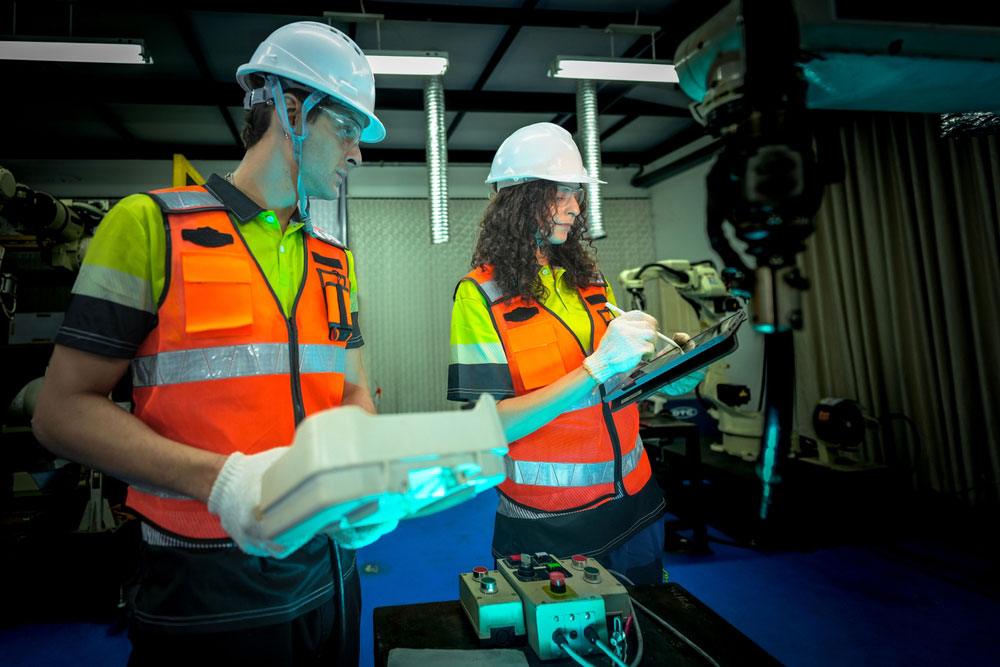
Critical production machinery, power infrastructure, robotics, heavy rotating equipment, and assets located in remote or hard-to-service environments are common candidates. Lower-risk assets may continue to rely on preventive maintenance, sometimes enhanced with selective condition monitoring.
The key is alignment: predictive maintenance should be deployed where it delivers measurable value, not as a one-size-fits-all solution.
Implementation Considerations
Successful predictive maintenance programs require more than sensors and software.
Data quality, integration with existing EAM or CMMS platforms, and change management all play a role. Maintenance teams need workflows that translate alerts into action, not just dashboards that generate noise. AI models must be trained on relevant operating data and continuously refined to reflect real conditions.
Organizations that approach predictive maintenance as a long-term capability, rather than a quick technological deployment, are far more likely to achieve sustainable results.
A Strategic Shift, not a Gimmick
AI-powered predictive maintenance is not about chasing trends or automating for its own sake. It represents a practical evolution in how organizations manage physical assets in an increasingly complex operational landscape.
By replacing assumptions with evidence and schedules with insight, predictive maintenance enables businesses to reduce downtime, control costs, improve safety, and extend asset life, all while operating with greater precision.
For organizations with physical operations or distributed assets, smart monitoring is no longer a future concept. It is becoming a foundational element of resilient, efficient operations.